 SITELIVE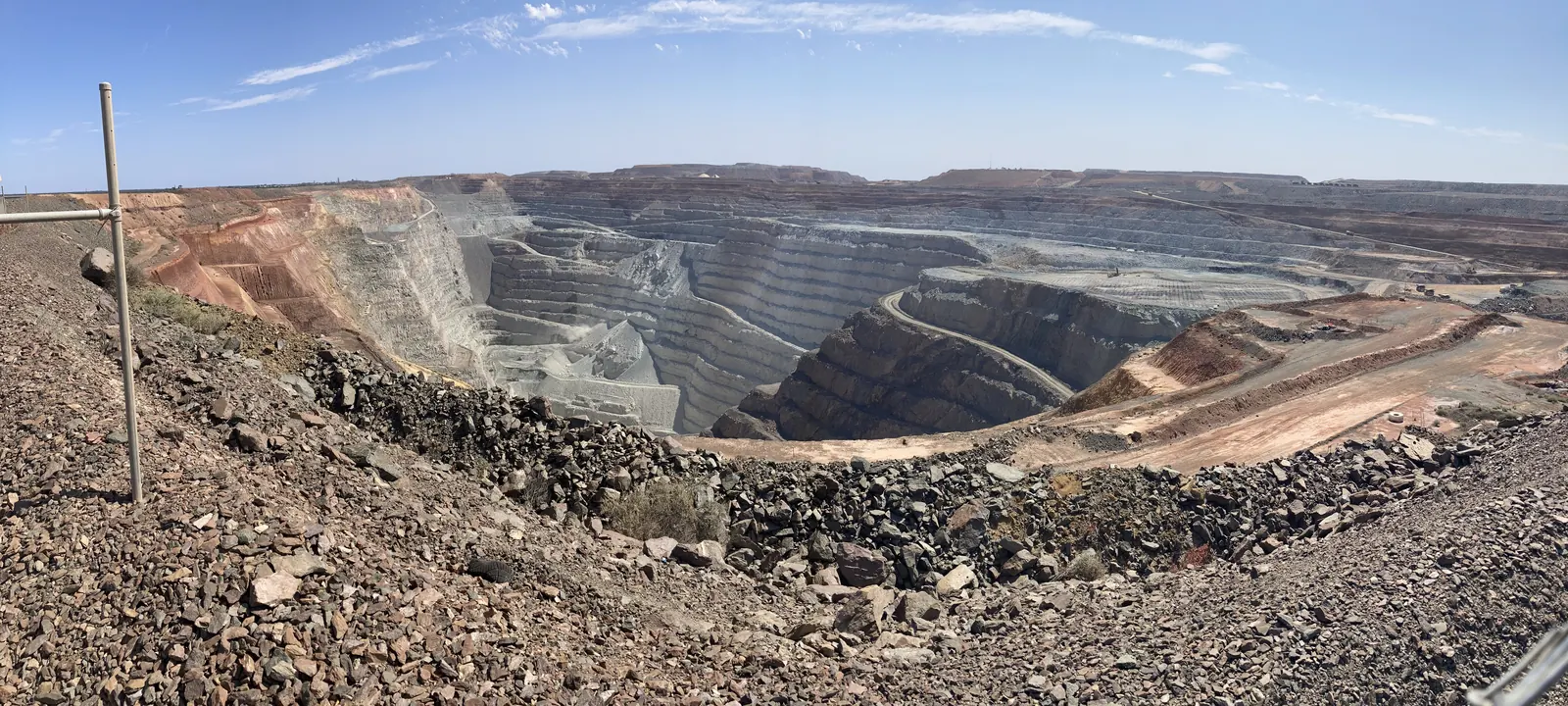
What was filed
CiDi, the Changsha-based autonomous driving company listed in Hong Kong as 3881, filed its 2026 interim report on 10 August. Revenue for the six months to 30 June was RMB803.735 million, up from RMB408.036 million in the same period last year. Of that, RMB784.481 million — 97.6 per cent of the total — came from autonomous driving (what the company calls transport robots, principally unmanned mining trucks and unmanned heavy trucks), RMB16.172 million from intelligent hardware and services, and RMB3.082 million from operating robotics, a line that was zero a year ago. Gross profit rose to RMB211.914 million from RMB69.708 million, taking gross margin from 17.1 per cent to 26.4 per cent.
The company remains loss-making: loss before tax of RMB129.156 million and a loss for the period of RMB113.025 million, against RMB455.086 million a year earlier, with a company-defined adjusted net loss (a non-IFRS measure) of RMB19.681 million. Total assets were RMB3,202.037 million and net assets RMB1,671.064 million at 30 June, down from RMB1,729.834 million at the end of December. The interim figures are unaudited.
The fleet numbers are the part worth reading twice
The operating counters are what make this filing unusual for autonomy. CiDi reports cumulative shipments across its intelligent products of more than 23,000 units, of which more than 3,400 autonomous driving vehicles have been delivered or are pending delivery. Unmanned mining trucks specifically: cumulative shipments above 1,900 units across nearly 40 mines globally, with unladen weights between 50 and 150 tonnes, and first-half shipments up 213.57 per cent year on year. Seven mines now run more than 100 unmanned trucks in normalised operation, and the largest single site runs more than 220. In February 2026 the company signed a 500-truck purchase order with Guangna Group, which it describes as the largest single formal purchase order in the global unmanned mining truck sector as at 30 June 2026. It also lists per-site additions in the half: close to 100 more trucks at Tianchi Energy's Jiangjun Gobi No.2 open-pit coal mine, 100 at CHN Energy's Hongshaquan No.1, and 140 at Datang's Shengli East No.2.
The commercial model matters as much as the count. CiDi states it sells unmanned trucks and dispatch systems to end mine operators rather than owning assets or running haulage as a service: the customer owns the fleet, staffs it and operates it. That is the opposite of the driverless-freight-as-a-service model being built on public roads, and it is why a mine can end up with 220 autonomous trucks on one site — the capital and the operating risk sit with the miner, not the technology vendor. It also means the utilisation data that would prove the economics sits with the customer, and is not in this filing.
Australia is running the same idea at one-thirtieth the size, deliberately
The Australian comparison published this week is a six-truck fleet. EACON Mining Technology said on 13 July that six Komatsu HD1500 rigid trucks, retrofitted with its ORCASTRA system, had begun day-shift autonomous operation without safety drivers in the active production environment of the Havana Pit at a gold mine in Western Australia — a project delivered with Thiess and Zijin-owned Norton Gold Fields, and, on EACON's account, the first autonomous haulage deployment in an active mining production environment in the Kalgoorlie Goldfields. International Mining reported on 13 August that the project completed its first autonomous night shift the previous week. The trucks were drawn from existing operations and converted through a drive-by-wire retrofit, on existing haul road infrastructure — the explicit pitch being autonomy without a new fleet or a new pit layout.
Two different bets, then, on the same technology. China's deployments are large, new-build, mostly open-pit coal, and increasingly sold as a product to the miner. Australia's newest deployment is small, retrofitted onto in-service assets in a live gold pit alongside manned equipment, and staged shift by shift — day operations first, with the site team upskilled before nights. The staging is the interesting engineering choice: night haulage changes the perception problem (dust, lighting, wet roads) and the support problem (who fixes an autonomous truck at 2am) far more than it changes the fleet size.
The honest limits
Read the loss reduction carefully before treating it as scale economics. R&D expenses fell from RMB151.3 million to RMB80.2 million, general and administrative expenses from RMB199.7 million to RMB137.8 million, and impairment losses from RMB84.3 million to RMB61.0 million, while selling expenses rose from RMB44.3 million to RMB57.5 million. Gross margin genuinely improved, but a large part of the narrowed loss came from spending less, not only from selling more — and the headline adjusted net loss is a non-IFRS measure the company defines itself, on unaudited interim figures.
The operating counters have the same caveat as every autonomy disclosure: they are shipments, not hours. "Delivered and pending delivery" is not trucks turning wheels, cumulative shipments are not an active fleet, and nowhere in this material is there fleet availability, utilised hours per truck per day, tonnes per truck-hour, or cost per tonne hauled — the four figures a mine plans and prices against. The company's statement of a zero-accident record over more than 1,300 operating days is its own attribution of its own incidents, with no published definition of a reportable event and no independent verification. Concentration is real too: the named projects are large Chinese open-pit coal mines, an operating and regulatory environment that does not transfer directly to a WA gold pit working alongside manned fleets and contractor crews. On the EACON side, fleet count, kilometres and project totals are company figures, the night-shift milestone reaches us through a trade report and the company's own statement rather than a filing, and performance is — in EACON's own words — still being evaluated as the project progresses.
What it means for operators
For anyone in Australian mining or quarrying weighing autonomy, this week hands you two procurement questions rather than a conclusion. First: retrofit or replace? The retrofit case now has a live production reference on HD1500s in the Goldfields, which changes the conversation from "buy an autonomous fleet" to "convert the trucks you own and keep the haul roads you have" — and shifts the risk onto integration, drive-by-wire reliability and on-site support depth rather than capital. Second: what will the vendor commit to in numbers? Ask for availability, utilised hours per truck per day, tonnes per truck-hour and the interaction rules with manned traffic, written into the contract, alongside the project management plan the WA regime expects for mobile autonomous mining. If a vendor can quote a 220-truck site but not an availability figure, you are being sold scale, not productivity.
And do the unglamorous half first. The mines that got value out of autonomy measured their manned baseline properly before the trial: cycle times by route, queue and spot times, standing time, actual utilised hours, and the cost of every hour a truck sat on site not moving. That baseline is what turns a vendor's counters into a business case — and it is the thing most operations discover they do not have once the pilot is already running.