 SITELIVE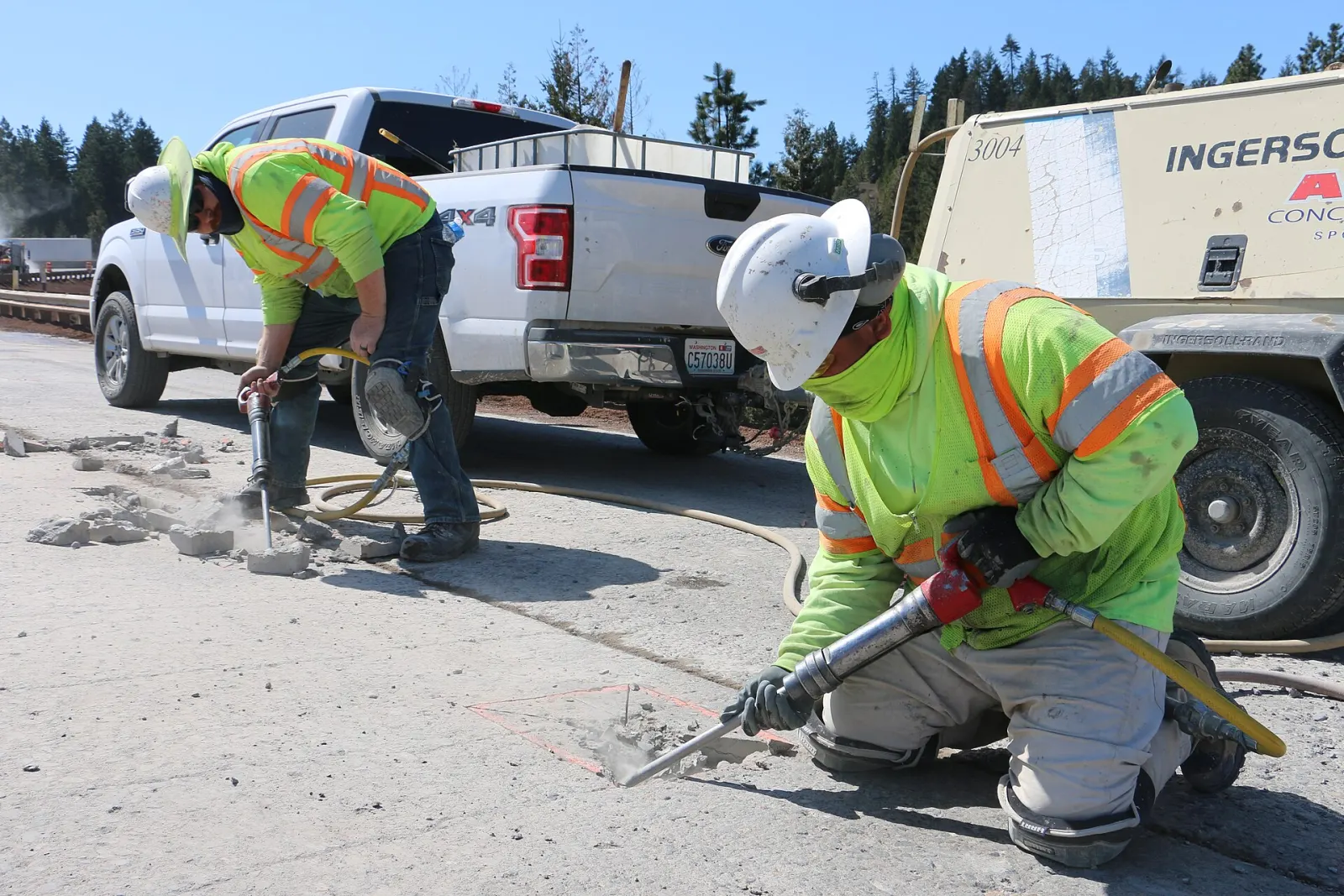
The duty is now on the process, not the product
On 1 July 2024 every Australian jurisdiction implemented the model WHS amendment making it an offence to manufacture, supply, process or install engineered stone benchtops, panels or slabs; from 1 January 2025 those products became prohibited imports under regulation 5M of the Customs (Prohibited Imports) Regulations 1956. The larger change came behind it. From 1 September 2024 Safe Work Australia's amendments extended controlled-processing duties to all crystalline silica substances — any material containing at least 1% crystalline silica by weight — requiring a documented assessment of whether the processing is high risk and, where it is, a written silica risk control plan prepared before work starts. Those are model regulations: they take effect in a jurisdiction only once that state or territory writes them into its own WHS laws, so the date a contractor actually has to meet is jurisdictional rather than national, and worth confirming with the local regulator rather than assuming.
The number underneath all of it is small and invisible. Australia's workplace exposure standard for respirable crystalline silica has been 0.05 mg/m³ as an eight-hour time-weighted average since 1 July 2020, halved from the previous limit. The US construction standard, 29 CFR 1926.1153, sets a permissible exposure limit of 50 µg/m³ with an action level of 25 µg/m³, and its Table 1 allows an employer to skip exposure assessment entirely provided it fully implements the specified control for the specified task — a stationary masonry saw with an integrated water delivery system requires no respirator, while the same cut made with a handheld saw indoors requires an APF 10 respirator regardless of duration. Respirable dust is the fraction fine enough to reach the gas-exchange region of the lung: you cannot see it, and a direct-reading dust meter reports respirable mass, not quartz content. Quantifying the crystalline fraction still means a filter sample and a laboratory.
What the measured evidence says about the controls
The most useful controlled dataset on hand-tool silica remains a 201-session simulation of manual concrete surface grinding published in the Journal of Occupational and Environmental Hygiene and indexed by NIOSH. Geometric mean respirable crystalline silica for uncontrolled grinding was 23.1 mg/m³ — hundreds of times the Australian standard. Local exhaust ventilation with a HEPA-filtered vacuum reduced that by 99.0%, a shop-vac by 98.1%, and wet grinding by 94.4%; switching general ventilation on removed a further 66%. Consumable choice mattered more than most crews assume, with 100–125 mm cups producing 0.53 mg/m³ against 2.43 mg/m³ for 180 mm cups, while water flow rate, surface orientation and sampling duration made no significant difference. Then the finding that belongs in a prestart: no combination of factors or control methods in that test space brought an eight-hour exposure below the recommended criterion of 0.025 mg/m³.
The honest limits
A 99% reduction from a catastrophic number is still a number that needs respiratory protection, enclosure, task rotation and time-at-task limits behind it — and that study ran in an enclosed workplace laboratory, which is a hard case, but so is a plant room, a lift core or a basement carpark. The engineered stone ban carries the same shape of limitation. It removes the single highest-exposure product from Australian workshops, but the definition is deliberately narrow: concrete and cement products, bricks and pavers, ceramic and roof tiles, grout, mortar, render, plasterboard, and resin-free sintered stone and porcelain all sit outside it, and every one of them liberates respirable silica when cut, ground, drilled or chased, while legacy stone still has to be removed, repaired and disposed of by someone. The exposure has been redistributed into the general trades rather than abolished. Nor is the regulatory direction uniform. MSHA's 2024 rule lowering the silica limit for coal and metal/non-metal mines was stayed by the US Court of Appeals for the Eighth Circuit on 11 April 2025; its Program Information Bulletin P26-01 of 9 April 2026 confirms the agency still enforces the pre-stay standards, and a Federal Register notice on 6 April 2026 delayed the metal/non-metal conforming amendments indefinitely pending judicial review. An operator spanning construction and mining, or several Australian states, is managing different legal minimums for the same dust, which argues for controlling to the strictest applicable standard rather than the local floor — not least because the health record is being centralised regardless. Notification of silicosis diagnoses to Australia's National Occupational Respiratory Disease Registry has been mandatory for prescribed medical practitioners since 22 May 2024, and a diagnosis made in 2036 will be traced back to work done now.
What it means on site
Treat the control as part of the tool rather than part of the toolbox talk. Build a task-to-control register — for each cutting, grinding, drilling or chasing task, the engineering control required, the extraction class or water feed, the consumable size, and the respirator with its fit-test date — and verify it at prestart the way a harness gets verified. Ban dry sweeping and compressed air for silica dust in writing, then supply the H-class vacuum that makes the ban realistic. Use air monitoring to test assumptions rather than to satisfy an auditor: its value is finding the task where the control is quietly not working. And hold health monitoring and exposure records against people, not just projects. With a disease latency measured in decades, the record has to outlive the job, the subcontract and usually the site.