 SITELIVE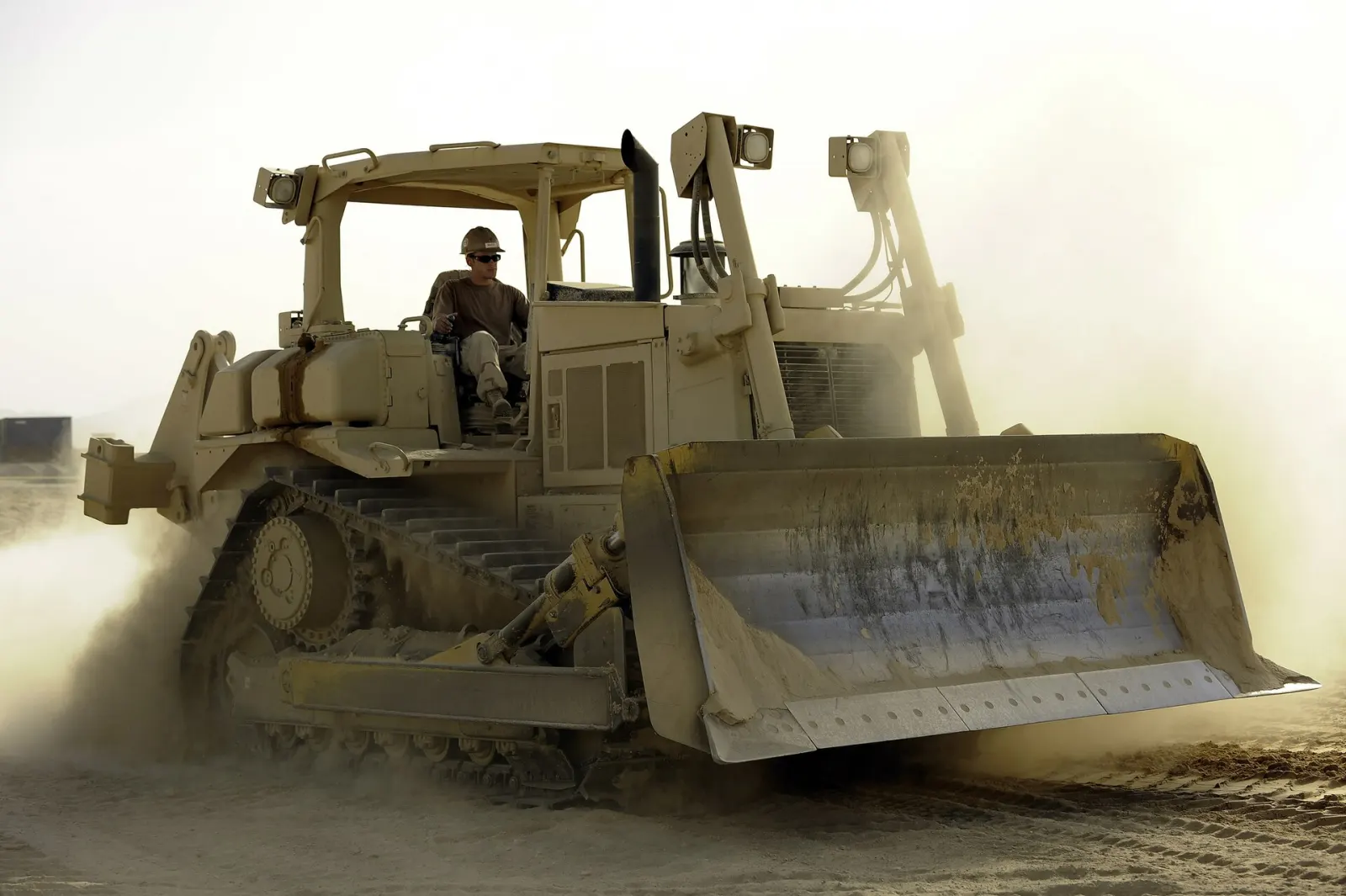
What is actually running
The most completely autonomous machine working on construction sites today does one job. Built Robotics' RPD 35 folds surveying, pile distribution, pile driving and data collection into a single robot for utility-scale solar foundations: 40,000 pounds of hammer impulse force, up to 224 piles carried on board per run, piles up to 19 feet and 600 pounds, working grades to 10 per cent, at 11 psi ground pressure so it keeps working on soft ground. Its paired RPS 25 stabiliser is what makes the output usable — the manufacturer states pile z-height tolerance up to 30 mm and pile-to-pile height variation up to 17 mm, which is the band single-axis trackers need. The machine flags piles that hit refusal and moves on, and it generates as-built drawings automatically. It is also not crewless: piles are loaded into baskets with a mini excavator and the baskets lifted onto the machine by telehandler before autonomous operation begins.
The version most contractors will actually buy sits in the cab. Komatsu's factory-integrated iMC 2.0 gives excavators auto stop control that halts the bucket edge at the design surface to prevent over-digging, plus auto grade assist, auto tilt and bucket hold; for dozers it adds proactive dozing control, in which the machine maps the terrain it tracks over and plans the next pass from it — Komatsu claims up to 60 per cent more productive — along with lift layer control for consistent layer thickness and tilt steering that the manufacturer says cuts operator steering input by up to 80 per cent. Caterpillar's Command takes the operator off the machine instead: a portable line-of-sight console working to 400 metres with up to ten hours of continuous operation, or a seated remote station for non-line-of-sight work, with the MineStar dozing version adding a semi-autonomous mode in which one operator manages multiple machines.
Why these tasks and not others
The common factor is not machine intelligence, it is constraint. Each of these applications has a bounded work area, geometry that comes from a model rather than from judgement, repetition measured in thousands of near-identical cycles, and no interaction with the public. Solar piling is the purest case in construction — tens of thousands of essentially identical piles driven to a survey grid within tracker tolerances. Bulk earthworks is next in line because the design surface is literally the instruction set. As soon as a task depends on reading unknown ground, working around live services, or sharing a footprint with another trade in real time, full autonomy stops and operator assistance takes over. That is a statement about the work, not about the software, and it is unlikely to change quickly.
The safety framework already exists
Contractors assessing this equipment are not in uncharted territory. ISO 17757:2019 sets safety requirements for autonomous and semi-autonomous machines and their systems in earth-moving and mining, covering the machine, associated systems and infrastructure, hardware and software, and safe use across the life cycle, for earth-moving machinery as defined in ISO 6165. Remote control is expressly outside its scope and falls under ISO 15817:2012, which requires that all powered movement be prevented if the operator controls are not activated or if control-signal or power supply is lost, that restoring power or signal must not create unintended machine motion, that resuming operation requires an intentional reset, and that where hazardous zones are not visible to the remote operator there must be a means of warning before start-up. In Australia, none of this displaces the primary duty: under the WHS Regulations and Safe Work Australia's approved code of practice on managing the risks of plant, the person conducting the business must eliminate risks from plant or minimise them so far as is reasonably practicable. An autonomous operating zone is a control measure you have to justify, document and police — not an exemption from the duty.
The honest economics
Every productivity number quoted above is a manufacturer's number, generated in conditions the manufacturer chose, and none of them include the costs that actually decide the business case: RTK base stations or network correction subscriptions and their maintenance, a survey control network that has to be right because the machine will faithfully build whatever surface it is given, model preparation and version control so the machine is never cutting to a superseded design, trained operators and a technician who can diagnose a localisation fault at 6am, and utilisation high enough to amortise the capital across a year rather than a job. The durable gain is narrower and duller than autonomy: hitting design first time. Over-excavation is paid for twice — once in the material removed and again in the imported fill and compaction that replaces it — and rework is paid for in programme. That is where machine control earns its keep today, with or without an operator in the seat. The practitioner action follows: put the survey control network, design surfaces and machine telemetry under the same document control discipline as drawings, name a person accountable for which model version is loaded on which machine, and treat the machine's as-built log as the survey record it already is rather than a file that dies on the monitor.