 SITELIVE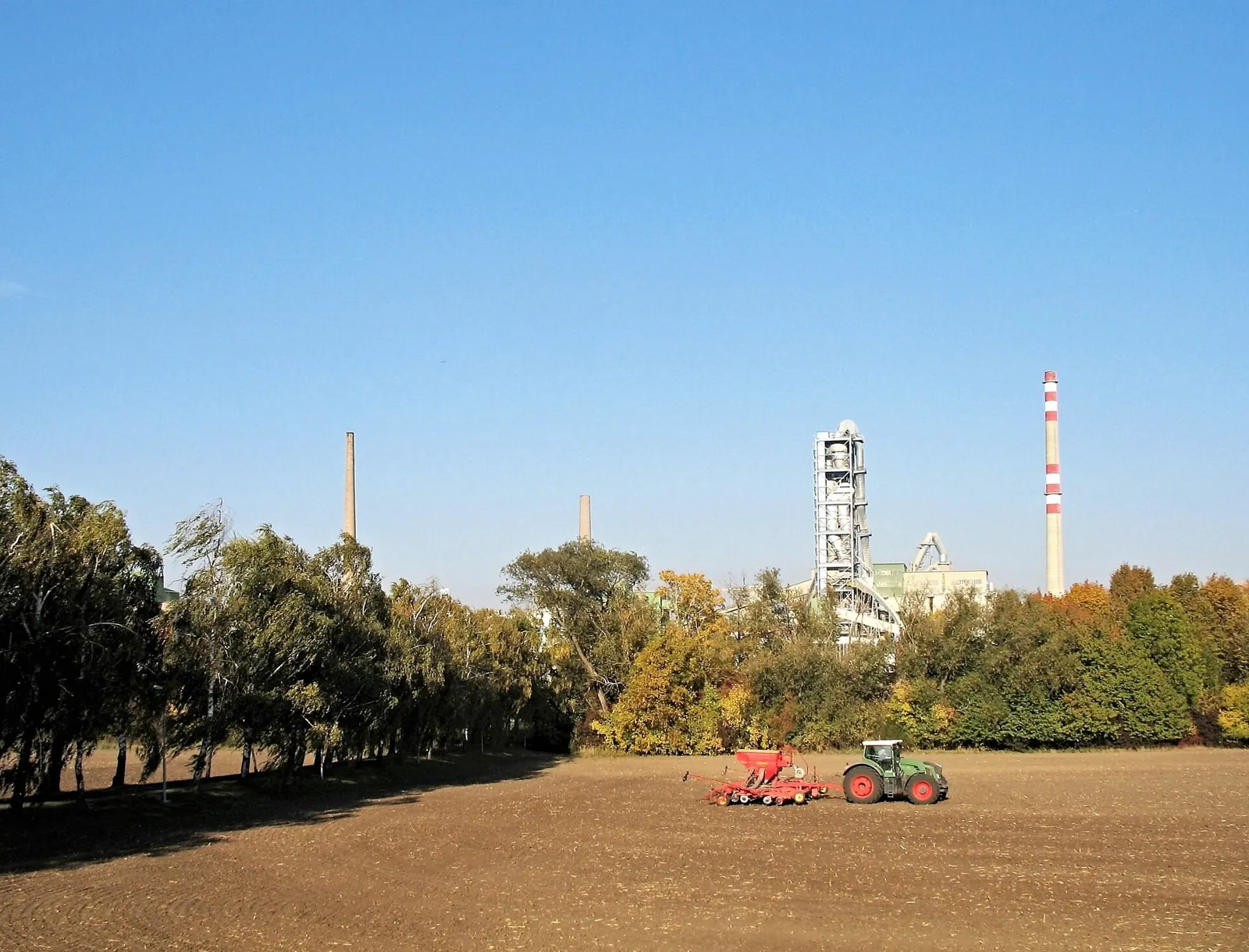
What opened
On Wednesday 2 September 2026 Czech prime minister Andrej Babiš, industry and trade minister Karel Havlíček and environment minister Igor Červený attended the formal opening of a calcined-clay production line at Holcim’s Čížkovice cement works near Lovosice, according to a release from the Office of the Government. Holcim’s own media release describes the line as the first of its kind in the Czech Republic, with an annual capacity of more than 115,000 tonnes of calcined clay sourced from the company’s local quarry, using patented technology to partially replace clinker and enabling the supply of 580,000 tonnes a year of its ECOPlanet low-carbon cement.
Holcim calls it the largest investment its Czech business has ever made: approximately CZK 1 billion (CHF 40 million), of which CZK 330 million (CHF 13 million) came from the Modernisation Fund administered by the Ministry of the Environment. The government release adds a figure Holcim’s does not: an annual emissions saving of roughly 45,000 tonnes of CO₂ once the line is running. Holcim places Čížkovice third in its European sequence after Saint-Pierre-la-Cour in France (2023), which it describes as Europe’s first dedicated calcined-clay line, and a large line commissioned at Guayaquil, Ecuador, in 2025.
Why calcined clay, and why it is not free
Most of the CO₂ from making ordinary cement comes from the chemistry of clinker: heating limestone drives off carbon dioxide that no fuel switch can avoid. Every tonne of clinker replaced by something else in the finished cement is process emission avoided outright. Calcined clay is attractive because suitable kaolinitic clays are common, the calcining temperature is well below clinker temperature, and the activated clay reacts with the lime in the cement to form strength-giving hydrates, particularly in combination with limestone in the LC3-type blends developed by the EPFL-led Limestone Calcined Clay Cement project over the past decade. Holcim’s release states the resulting cement carries a footprint around 30% lower “with no compromise in performance.”
The trade-offs are real. Calcining still needs heat, so the fuel and CO₂ of the calciner have to be netted against the clinker avoided; the clay has to be the right mineralogy and reasonably consistent, which is why sourcing it from Holcim’s own quarry matters more than it sounds; and blended cements behave differently from pure Portland in early strength, water demand, setting time and colour. A 115,000-tonne line feeding 580,000 tonnes of cement implies a substitution level around 20% by mass, a figure we have derived from the two published capacities rather than one either party has stated.
The honest limits
Neither Holcim nor the government has published the numbers a specifier or a rival producer would want. There is no energy consumption per tonne of clay, no fuel type for the calciner, no statement of the clinker factor of the resulting cement, no cost per tonne, and no explanation of how the “around 30%” reduction is calculated or against what baseline. The 45,000 t CO₂/yr figure appears only in the government release and is described there as the saving after full commissioning; it does not appear in Holcim’s text. The two releases also differ in one claim: Holcim says first of its kind in the Czech Republic, the government release says first of its kind in Central Europe. We are reporting both and taking neither as established.
The Holcim media release carries a publication date of 28 August, five days before the ceremony it describes, and includes the prime minister’s quote that the government release attributes to the day itself; the physical opening is the government-dated event. Nor is there any published data on the performance of the ECOPlanet cement from this specific line in Czech or European standards testing. Holcim’s statement that there is no compromise in performance is a manufacturer’s claim about a product that has, at plant scale here, been in production for days.
What it means for operators
For contractors and precasters in Central Europe the practical question is supply and specification: 580,000 tonnes a year is a meaningful share of one plant’s output, and clients with embodied-carbon targets will start asking for it. That means mix designs, trial batches and early-strength curves for a blended cement, and quality records that name the cement and its declared footprint on every pour rather than assuming the bag is the bag. The lesson for anyone using a low-carbon cement is the same as with any change of binder: qualify it on your job, not on the datasheet.
For governments and plant owners elsewhere, the structure of the deal is as instructive as the technology. A third of the capital came from a state decarbonisation fund; in return the state got a plant-scale line, a headline emissions number and a ribbon to cut. The question producers elsewhere — including in Australia, where the AS 3972 general-purpose cement standard already accommodates blended cements — will be asking is how quickly a line like this pays back without the subsidy.