 SITELIVE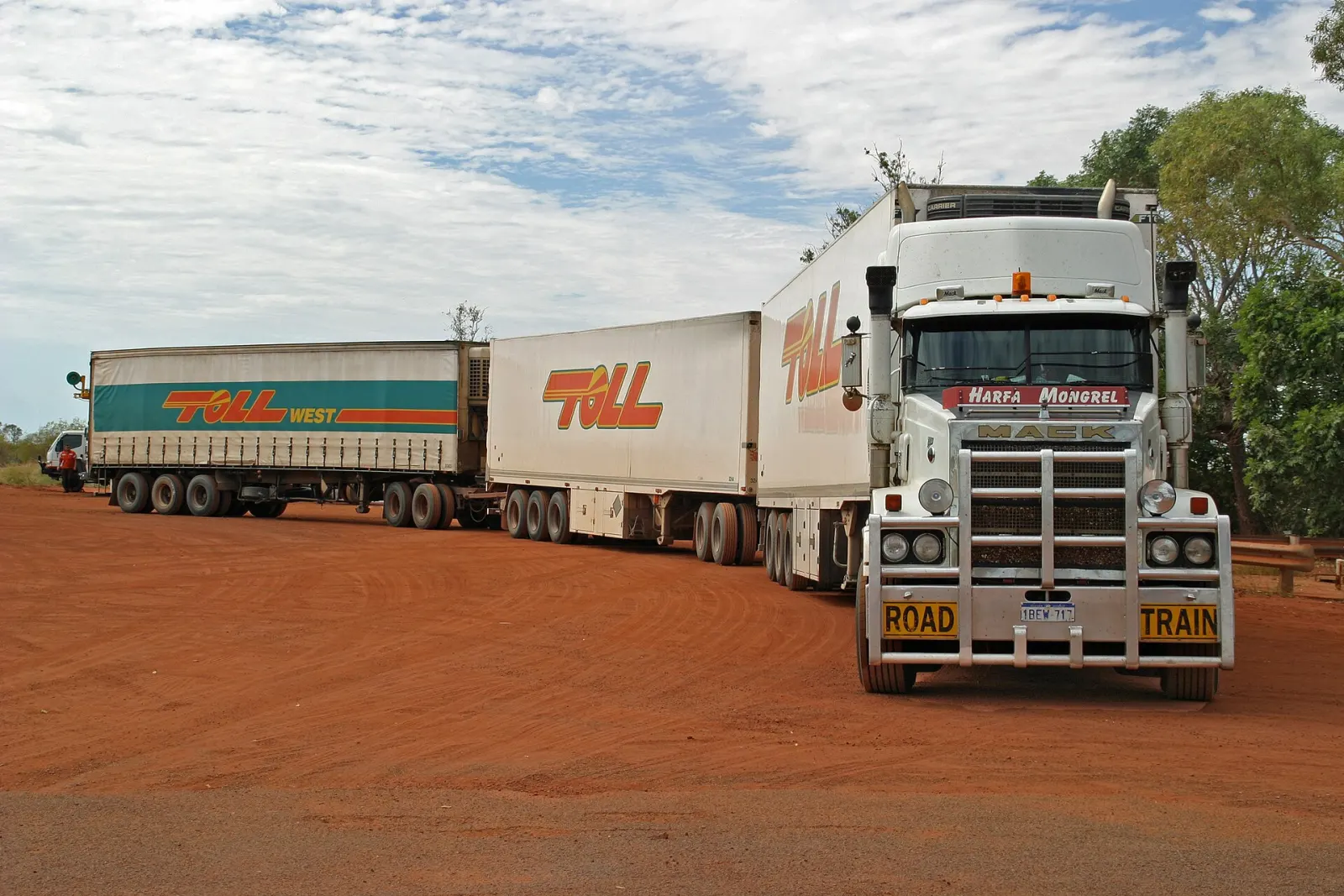
What commences on 1 August
The amended Heavy Vehicle National Law commences on 1 August 2026. The Heavy Vehicle National Law Amendment Bill 2025 and the accompanying 2025 amendment regulations were passed without amendment by the Queensland Parliament — the host jurisdiction for the national law — on 18 November 2025, with the final legislative package approved by ministers in May 2026 and the supporting statutory instruments released by the NHVR and NTC on 29 May 2026. The mass and dimension consequences will arrive through the Heavy Vehicle (Mass, Dimension and Loading) National Regulation. This is the most consequential change to prescribed general-access limits in years, and unlike most heavy-vehicle reform it does not require an operator to apply for anything: the numbers will change underneath the fleet.
Mass: General Mass Limits absorb Concessional Mass Limits
The central change is that GML will rise to the masses that previously applied only under CML, and CML will be removed from the regulation entirely. In practice: a tandem axle group goes from 16.5 to 17.0 tonnes; a tri-axle group (other than a pig trailer) from 20.0 to 21.0; a quad-axle group with dual tyres or singles at least 375 mm wide from 20.0 to 21.0, and with narrower singles from 15.0 to 15.5. At the combination level, a complying steer axle vehicle that is neither a B-double nor a road train will move from 43.0 to 44.0 tonnes, a prime mover with a twinsteer towing a tri-axle semitrailer from 46.5 to 47.5, and other qualifying combinations from 42.5 to 43.5. Overall, that is up to one extra tonne below 55 tonnes gross and up to two tonnes above it. The 5 per cent gross mass restriction and the one-tonne tri-axle mass transfer allowance are gone; bus axle group limits do not increase.
Euro VI concessions extended to road trains
The steer-axle concession for Euro VI prime movers, previously capped at 6.5 tonnes, will rise to 7.0 tonnes and will extend to road trains. The qualifying conditions are specific and worth checking before anyone loads to it: compliance with ADR 80/04 or later; a front underrun protection device compliant with ADR 84 unless that rule provides otherwise; a cabin compliant with UN ECE Regulation 29; tyres, axle and suspension rated by the manufacturer for the mass limit on the steering axle; and a GVM of 15 tonnes or more. The regulatory logic is coherent for once — ADR 80/04 has been mandatory for new heavy vehicle models supplied from 1 November 2024 and for all new heavy vehicles from 1 November 2025, so the mass concession follows the emissions standard the fleet is already being forced onto.
Length: 19 metres becomes 20
General-access length for prime mover and semitrailer, rigid truck and pig trailer, rigid truck and dog trailer, and rigid truck and tag trailer will rise from 19.0 to 20.0 metres. The supporting geometry moves with it: maximum distance from front articulation to the centreline of the rear axle group will go from 9.5 to 10.5 metres, front articulation to the rear of the trailer will move from 12.3 to 14.5 metres, and rear overhang for combinations between 19 and 20 metres will move from 3.7 to 4.0 metres — with the older rule (the lesser of 3.7 metres or 60 per cent of wheelbase) still governing anything at or under 19 metres. Trailers in a 19–20 metre combination with gross trailer mass over 10 tonnes must have ADR 38/05-or-later braking powered by the towing vehicle, and side underrun protection to ADR 106. B-doubles are not included in this change; the NHVR has flagged them for a future amendment.
Tow mass ratio, and the steer-axle floor
The prescribed 1:1 tow mass ratio will be replaced by 1:1.3, which is the change most likely to alter what a plant hauler or tipper-and-dog operator can legally do with existing equipment. It comes with a stability guardrail: the mass on the steer or twinsteer axles must exceed either 20 per cent of the sum of all axle masses on the towing vehicle, or the manufacturer's minimum steer-axle mass when towing, whichever is greater. That second limb is the trap. Manufacturer minimums are specific to the vehicle and are not something a weighbridge docket tells you; an operator loading to the new ratio without checking the build plate is compliant with the regulation and non-compliant with the vehicle.
Accreditation: the entry price falls, but not everywhere
Mass Management Accreditation will no longer be required to run at the new masses at general access — historically the single biggest administrative barrier to smaller fleets accessing concessional mass. It is still required for Higher Mass Limits, for the PBS scheme and for a defined list of other notices and permits. At the same time the National Heavy Vehicle Accreditation Scheme will transition to the Heavy Vehicle Accreditation scheme, with mass management becoming Alternative Compliance Accreditation – Mass. For PBS operators, the NHVR's guidance is that Vehicle Approvals issued before commencement remain valid as legacy approvals, all references to CML on them should be read as GML, and new approvals will relabel GML as GML 1 and CML as GML 2.
PBS is still where the real productivity lives
None of the above touches the scheme that has actually moved Australian freight productivity. The joint NHVR, CILTA and NTARC review of major crash rates for 2015–2019 found PBS vehicles involved in 60 per cent fewer major crashes than conventional trucks on a distance-travelled basis — up from 46 per cent in the earlier study — with PBS articulated combinations recording 5.4 major crashes per 100 million kilometres against 17.6 for their conventional equivalents, and a forecast 143 lives saved over 20 years. The NHVR's own 2024 reform paper counts over 100 deaths prevented, more than 1.2 billion litres of diesel not burnt and 3.2 million tonnes of CO2 avoided. The mechanism is unglamorous: fewer, better-designed vehicles doing the same task means fewer truck-kilometres and fewer interactions with everyone else on the road.
Telematics is the price of access
Access for high-productivity vehicles is monitored, and the monitoring is the deal. Under the HVNL an intelligent access program grants improved network access in exchange for approved telematics reporting compliance with stated conditions. The Intelligent Access Program and the Telematics Monitoring Application both do this — TMA is offered in NSW and Victoria as an IAP alternative for some vehicle types and is required in Queensland for eligible Class 2 and specified Class 3 vehicles — with Smart On-Board Mass layered on top and mandatory for high-productivity freight vehicles in Victoria, some PBS vehicles in NSW, and eligible Class 2 and specified Class 3 vehicles in Queensland. NSW vehicles running at Higher Mass Limits, including PBS vehicles, must be enrolled in IAP or TMA. Devices must be TCA-approved, and the PBS access classes they police are length-defined: Level 1 up to 20 metres, Level 2 up to 26 or 30 metres by access class, Level 3 up to 36.5 or 42 metres, and Level 4 up to 53.5 or 60 metres.
Where the tonnes are not free
Extra mass is only useful if the network will carry it, the vehicle is rated for it and the payload is worth more than what it displaces. The reform does not change bridge formulae, does not override a road manager's decision on a local route, and does not re-rate anyone's tyres, axles or suspension. A tonne of extra legal mass on a vehicle whose steer axle rating is already the binding constraint is worth nothing, and a fleet that responds by simply loading heavier will find the gain absorbed by tyre wear, brake duty and pavement-condition complaints. The genuinely valuable move is the design one: the same task with fewer trips, which is what PBS has been quietly delivering for nearly two decades and what the mass increase now makes available to operators who never held accreditation.
What operators should do this month
Four things, in order. Audit every Vehicle Approval and permit against the new labelling so nobody is running to a number that has been renamed underneath them. Check manufacturer steer-axle and twinsteer minimums for anything that will use the new tow mass ratio, and check ADR 80/04, ADR 84 and UN ECE R29 status for any prime mover you intend to run at the 7.0-tonne Euro VI steer limit. Re-run loading plans against the new axle group limits rather than assuming the old CML numbers carried across unchanged — several did not. And confirm telematics enrolment and Smart OBM status for every vehicle whose access depends on it, because the reform reduced the accreditation burden at general access and left it entirely intact for the high-productivity work where the money actually is.