 SITELIVE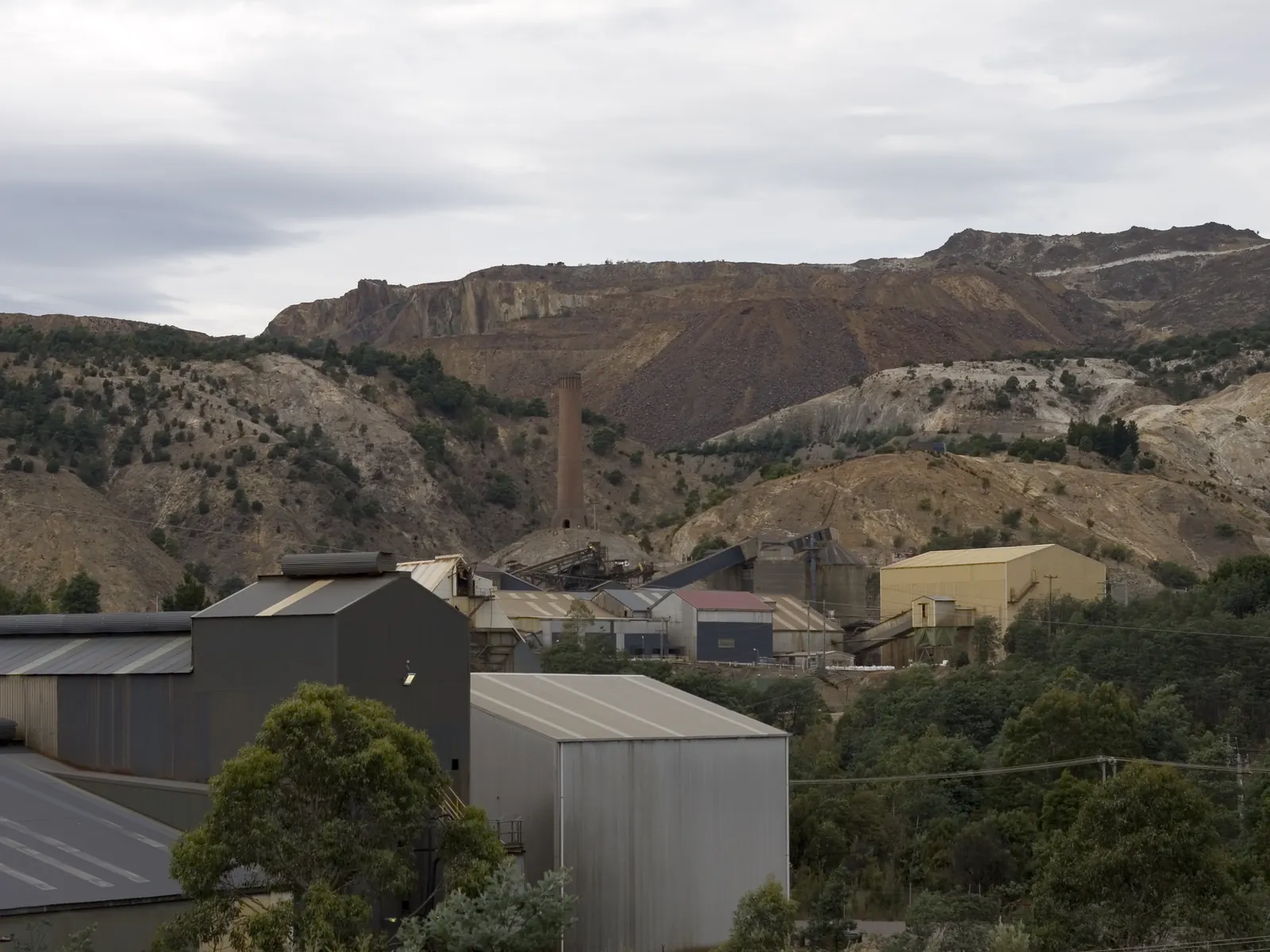
What was decided
In its H1 2026 results, released on 1 September and filed with the SEC the same day, Sibanye-Stillwater reports that its board has taken a positive investment decision on the Mt Lyell copper-gold project near Queenstown on Tasmania’s west coast. The decision follows an AACE Class 2 feasibility study and an internal assurance review completed in Q1 2026. Project execution is planned to start in H1 2027 and first metal is expected in early 2029. The company is careful to footnote that the approval is subject to the conclusion or waiver of an agreement with the previous owner — so this is a board decision, not yet an unconditional go.
The numbers are stated in real 2026 terms. Average steady-state production, expected by 2032, is about 26 kt of copper a year with about 16 koz of gold and 116 koz of silver. All-in sustaining cost is put at US$2.56 per pound. Total initial project capital is approximately US$340 million (A$490 million), with a maximum cash draw of around US$370 million (A$530 million). The company quotes a post-tax NPV of roughly US$550 million at a 7.4% WACC and an IRR of about 20%. The initial mine life is 23 years. For 2026 the capital guidance is A$11 million (US$7.5 million), of which about US$4.1 million falls in the second half as the project moves into execution.
Why it is a restart and not a new mine
Mt Lyell began producing in 1894 and ran continuously until Copper Mines of Tasmania put it on care and maintenance in 2014. Sibanye-Stillwater picked up the option over CMT through its 2021 investment in New Century Resources, exercised it in 2023, and has since carried the project as a feasibility study. The company’s own project page lists a 79.4 Mt mineral resource containing 1,609 Mlb of copper and 0.5 Moz of gold across underground and open-pit deposits, with all leases held by CMT.
The filing leans heavily on what is already there: substantial existing infrastructure, established operating knowledge, proven mining and processing methods, multiple production areas and renewable hydropower. That is the whole argument for the capital figure. A greenfield copper mine of this scale would carry a processing plant, access, power and water from scratch; a brownfield restart inherits a shaft, a mill footprint, a tailings history and a town that has hosted a mine for 130 years. The company’s phrasing is that existing infrastructure “reduces execution complexity and upfront capital relative to a comparable greenfield development”, and that the project avoids an acquisition premium. Both of those are true in principle; whether they hold at the tender box is what 2027 will show.
The honest limits
Start with the footnote most likely to be missed. The US$340 million initial project capital excludes shaft refurbishment of about US$74 million (A$106 million), which is planned to commence after practical completion. That is a legitimate scoping choice — the mine can, on the company’s account, start producing before the shaft is refurbished — but it means the all-in capital to get Mt Lyell to the operation described in the study is closer to US$414 million than US$340 million, and the shaft work will be done on a producing mine, which is harder than doing it on an idle one. The maximum cash draw of US$370 million is the more useful number for anyone thinking about funding risk, and even that predates the shaft.
The schedule is long by design. Execution starts in H1 2027, first metal in early 2029, steady state by 2032: that is roughly five and a half years from decision to nameplate, and the project will spend most of that time exposed to Tasmanian west-coast weather, a thin regional contractor market, and whatever copper does in the meantime. The AISC of US$2.56/lb and the 20% IRR are real-2026 estimates from a Class 2 study, which by AACE definition carries an accuracy range of roughly -15% to +20% on capital. The filing does not publish a copper price assumption alongside the NPV in the project section, so the return figure should be read as the company’s, on the company’s deck.
And the condition. “Subject to conclusion or waiver of agreement with previous owner” is a short footnote with a long tail. The filing does not say what the agreement covers or when it is expected to be resolved. Until it is, the sanctioning is a board position rather than a contractual commitment, and the A$11 million this year is money spent getting ready rather than building.
What it means for operators
For Tasmania’s west coast it is the first new major underground metals build in a long time, and the 2027 execution window puts it in direct competition with the state’s energy and infrastructure programmes for the same shaft crews, electricians, fitters and haulage. Contractors who want this work should be reading the feasibility-study scope now, not the tender when it lands. The company’s own language — “disciplined, stage-gated execution” — is a signal that packages will be let in stages against gates, which favours contractors who can show a clean record from the previous stage.
For anyone restarting rather than building, Mt Lyell is a case study in how to present brownfield capital honestly: state the initial number, footnote what is deliberately outside it, publish the maximum cash draw, and separate the mine life from the ramp-up date. The temptation on a restart is to lean on the old infrastructure as if it were free. It is cheaper than new; it is not free, and the shaft footnote is the company saying so.