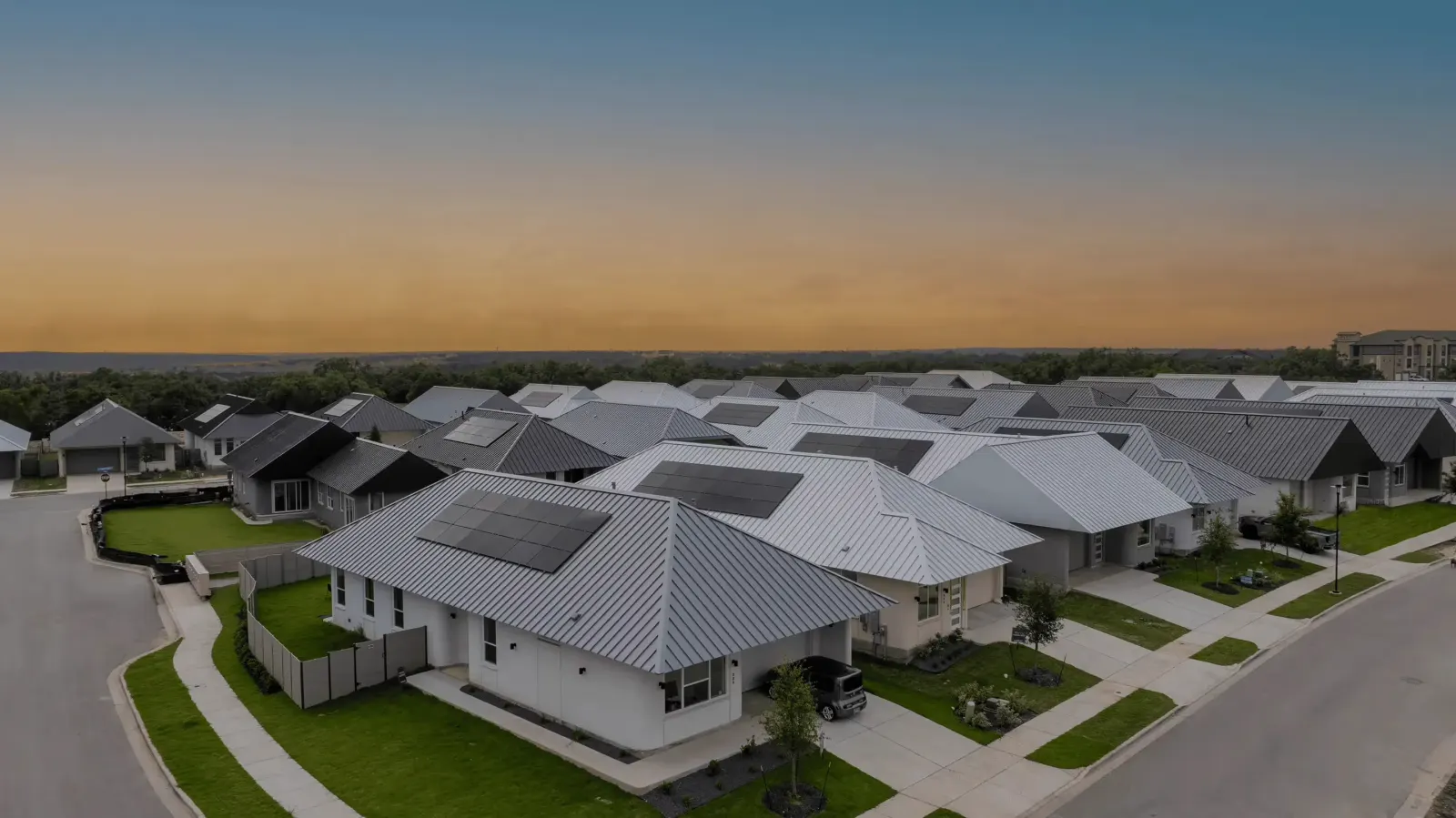
The scale shift
The largest 3D-printed community to date — roughly 100 homes at Wolf Ranch in Georgetown, Texas — was printed by ICON’s Vulcan gantry printers for national builder Lennar, with wall systems extruded in Lavacrete, ICON’s proprietary cementitious mix. In parallel, Denmark’s COBOD has shipped modular gantry printers (the BOD2 line) to customers in more than 50 countries, where they have printed houses, schools, wind-turbine tower bases and data-centre walls. Two different strategies — ICON as an integrated builder-technologist, COBOD as an equipment vendor — both now have real order books.
What printing actually buys
The printed element is the wall system: formwork-free, low-waste, geometrically unconstrained (curves cost the same as straight lines) and fast where labour is the constraint. Printing does not remove foundations, roofs, services, openings or finishes, which is why honest programme comparisons show total-build savings far smaller than the "printed in 24 hours" framing suggests. The savings concentrate in formwork elimination, crew size and design freedom.
The engineering question that decides adoption
Layer-bonded concrete without conventional reinforcement is the structural frontier. Current practice reinforces printed walls with cast-in-place cores, post-installed steel or hybrid block-outs, and codes are catching up — the appearance of printed-concrete provisions in evaluation reports and standards work (including UL 3401 evaluations in the US) is what lets a bank finance and an insurer cover a printed house. Code acceptance, not printer capability, is the adoption gate.
What it means on site
A printer is a scheduled resource like a crane: it changes sequencing (walls before roof trades mobilise), quality assurance (layer logs are a built-in pour record) and procurement (mix design becomes a supply-chain item). Contractors piloting printing should treat the printer’s telemetry as a QA ledger — it is the first construction method that documents itself while it works.