 SITELIVE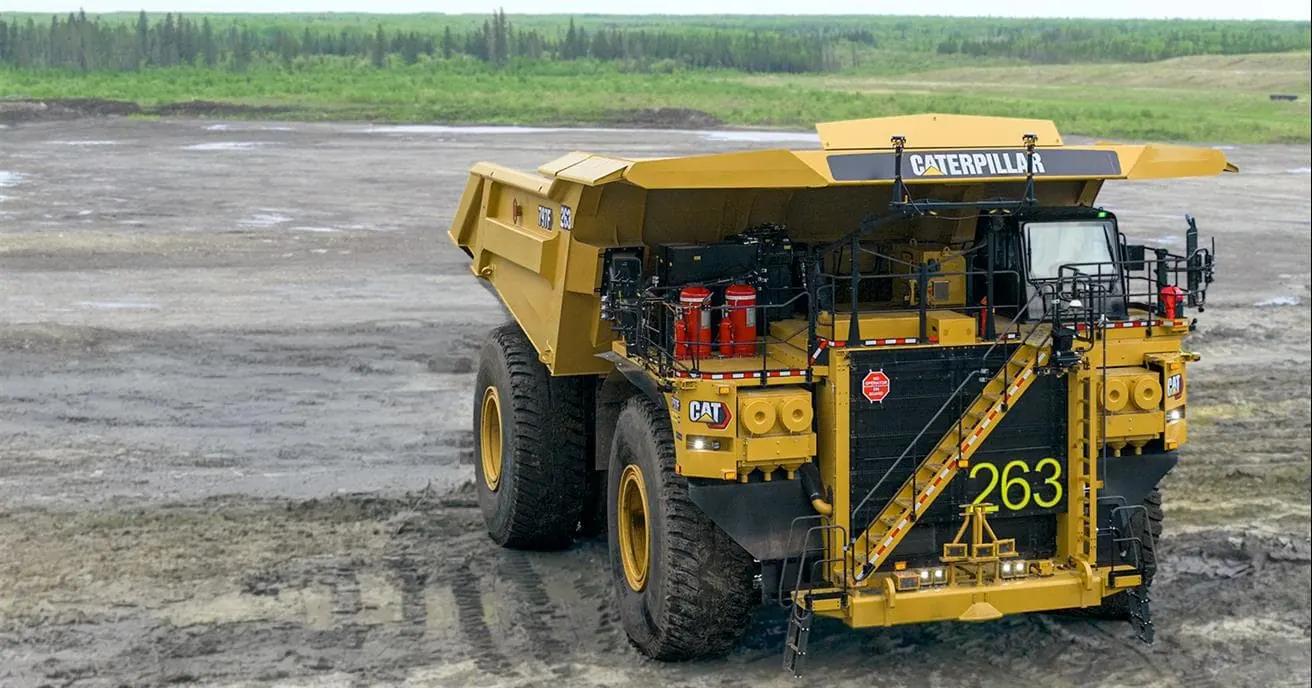
What Suncor published
On 13 August 2026 Suncor published a short post — “Back-to-back wins on our autonomous mining journey” — announcing the launch of the first Autonomous Operating Zone at Syncrude Mildred Lake. The operative facts are three sentences long: 19 trucks are equipped for autonomous operation at Mildred Lake, with plans to convert an additional 21 by the end of the year; this summer the autonomous fuel module will be brought online; and training and lessons learned are being extended to support planned growth of the AHS fleet to 70 trucks. Suncor frames it against its first deployment: the Base Plant implementation in 2024 showed what was possible, and Syncrude “proves it wasn’t a one-time success”. Suncor has been the operator of Syncrude since 2021, holds a 58.74 per cent interest in the joint operation and quotes gross capacity of 350,000 barrels per day of synthetic crude.
Read the page closely and it disagrees with itself. The summary bullets at the top say “14 haul trucks now equipped for autonomous operation at Mildred Lake”; the body says 19. We have taken 19 as the current figure because it is the number in the prose and the number International Mining reported on 22 August, but a company page carrying two different fleet counts for the same milestone is worth naming rather than smoothing over. For scale, Suncor’s June 2025 account of Base Plant describes almost 120 autonomous haul trucks across two integrated mines, 140 expected by the end of that year, all ore at Base Plant moved by driverless trucks, and a Komatsu 980E fleet running Komatsu’s FrontRunner system.
The Mildred Lake fit-out is a different machine and a different vendor. International Mining reports — and we treat this as trade-press colour rather than a company statement — that the converted trucks are 363-tonne-class mechanical-drive Caterpillar 797F units running Cat’s Command for hauling, installed with Caterpillar and its dealer Finning Canada. Suncor’s own banner photograph is consistent with that: the truck carries the 797F designation on the dump body and fleet number 263.
Why the second site is the harder one
A first autonomous deployment proves the technology. A second one, on different iron and a different vendor stack, tests whether the operator has built a repeatable process — and that is a much more useful thing to know. Base Plant is diesel-electric Komatsu on FrontRunner; Mildred Lake is mechanical-drive Cat on Command. Almost nothing about the machine interface transfers between those two, which means what Suncor is actually reusing is the organisational layer: the traffic-management design, the control-room model, the training pipeline, the change process for taking a pit from manned to mixed to autonomous.
The “Autonomous Operating Zone” is a real engineering artefact rather than a phrase. In Caterpillar’s own description of Command for hauling, the zone is the boundary that defines the safety case: everyone entering it carries an autonomous stop device that can halt every autonomous machine in the area, trucks obey speed limits, queuing protocol, signalling and predetermined intersection priorities, and the system is designed so staffed equipment, light vehicles and people continue to work inside the same pit. That is why the rollout is zone by zone and not mine by mine — each new zone is a new traffic-management design with its own interactions, its own boundary controls, and its own authorisation to enter.
The line most operators will skim is the one that matters most: the autonomous fuel module. Hauling is rarely what caps an autonomous fleet — it is everything the operator used to do incidentally. Refuelling, moving between benches, clean-up support, checks at the start of a shift. Automate the haul and leave the fuel bay manned and you have re-introduced a manual intervention per truck per shift, with a queue attached. A fleet heading for 70 trucks needs the fuelling loop closed before the truck count means anything, which makes “the autonomous fuel module will be brought online” the more informative half of Suncor’s announcement.
The honest limits
There is no performance data here at all. No tonnes, no cycle times, no availability or utilisation figures, no cost per tonne, no comparison against the manned baseline in the same pit, and no capital cost per conversion — for a company that has run AHS since 2018 at Base Plant and could publish a like-for-like comparison if it wanted to. “Productivity, reliability and cost competitiveness” is an assertion in a corporate post, not a result. The dates are soft in the same way: “this summer” and “by the end of the year” are northern-hemisphere 2026, and 70 trucks is a plan with no date attached.
The Base Plant colour in circulation this week needs the same discipline. International Mining reported on Suncor’s “Mud Mode” — a change that came up on the Q2 2026 earnings call, aimed at keeping Komatsu autonomous trucks productive in soft, wet ground where they would otherwise be pulled up. We could not read the transcript itself, so what exists in the public record is a trade publication’s account of a company statement, with no published effect size. It is a plausible and interesting piece of operational engineering; it is not a verified number.
And oil sands haulage is its own world. Soft ground, freeze-thaw, shovel faces in overburden and bitumen ore, and a mine plan with a much shorter haul than a Pilbara iron ore pit. Suncor’s replication result travels as evidence that a second-site conversion is manageable; it does not travel as evidence about hard-rock ramp haulage, mixed contractor fleets, or the interoperability problem that shows up when one site runs two vendors’ systems at once.
What it means for operators
Western Australia has had a code of practice for safe mobile autonomous mining since 2015, and its structure is the tell: the code frames the desired safety outcomes around the approval requirements of the project management plan and the role of the competent person in hazard management, with continuing consultation between the system supplier and the mine as end user. In other words, the regulator’s view of autonomy is a documentation and competency problem before it is a technology problem. That is exactly the asset Suncor is transferring from one site to the next, and it is the one most operators under-build.
If you are taking a second area autonomous — or a first — the transferable artefacts are boring and specific. The zone boundary and what changes at it. Who is authorised to enter, who carries a stop device, and how that is verified at the gate rather than assumed. The interaction rules with water carts, graders, dozers and light vehicles, written down, trained against, and signed off per person. The change record for every time the zone geometry moves. If those live in a folder someone updates by hand, the second site will cost as much to stand up as the first.
Then measure the baseline before the conversion, per zone, or you will never be able to prove the conversion paid for itself. Tonnes per operating hour, queue time at the shovel, availability, unplanned stops per shift — and the count of manned interventions the autonomy still requires, because that is the number that quietly decides whether the fleet scales. A conversion with no “before” is a story, not a result.