 SITELIVE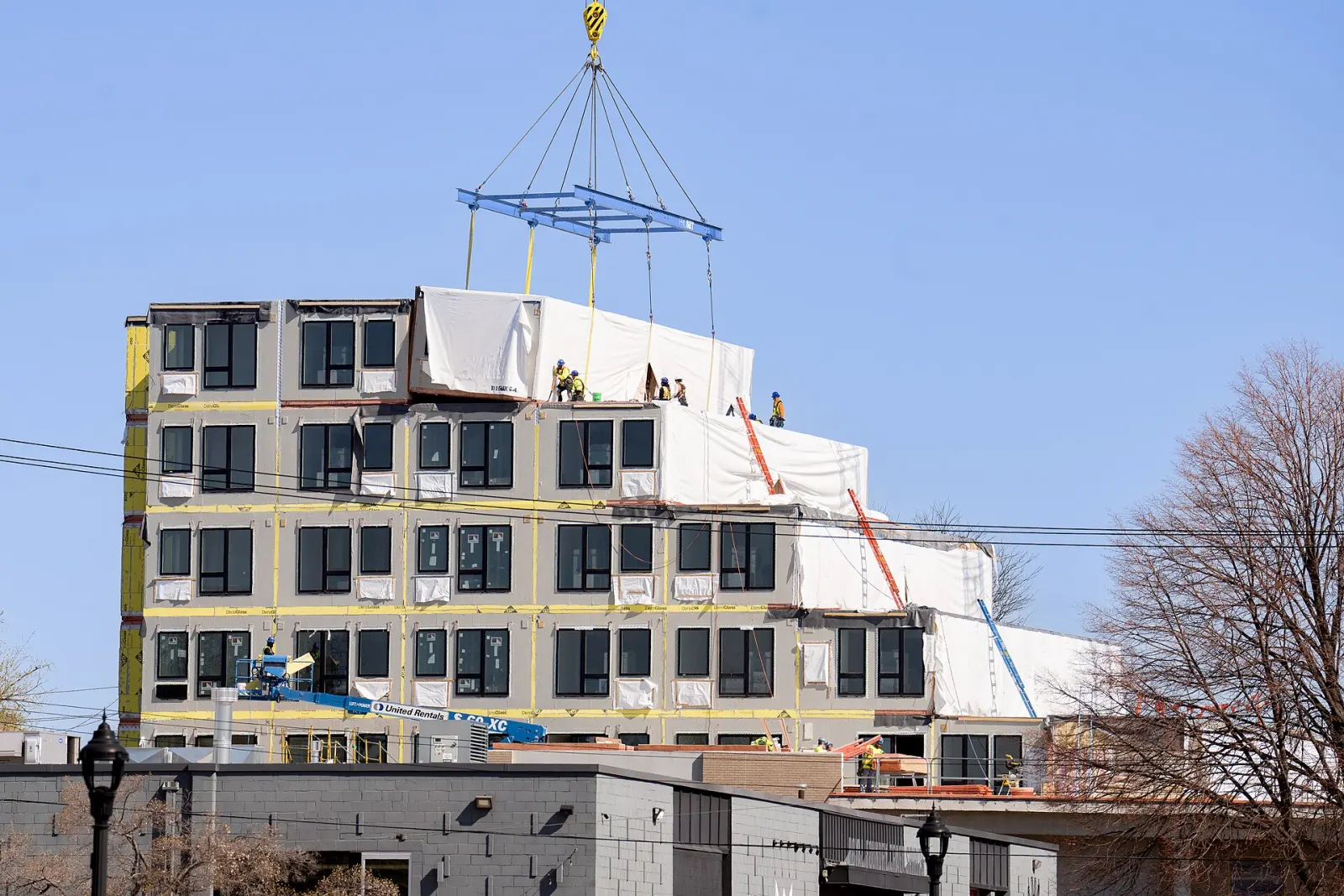
What has actually been built
Singapore does not treat volumetric modular as an experiment: it treats it as a regulated productivity requirement. Since 1 November 2014, prefabricated prefinished volumetric construction has been required on selected non-landed residential sites released under the Government Land Sales programme, under the Building Control (Buildability and Productivity) Regulations and the prevailing Code of Practice on Buildability, and BCA's Built Environment Transformation Gross Floor Area Incentive Scheme sets a minimum of 65 per cent PPVC alongside thresholds for architectural works, prefabricated MEP and system formwork. The tallest result to date is Avenue South Residence in Bukit Merah: two 56-storey towers reaching 192 metres and 1,074 apartments, assembled by main contractor United Tec from 3,034 volumetric modules finished in a factory in Tuas. Developer UOL put the productivity improvement at roughly 40 per cent in manpower and time; BCA's own account of the job records about 18 months to complete each tower, at least seven months shorter than conventional methods.
Hong Kong's modular integrated construction record is broader and, in one case, extraordinary. The Hong Kong Infection Control Centre at AsiaWorld-Expo — six ward buildings with 136 negative-pressure wards and 816 beds, built to permanent building standards — commenced in September 2020 and was completed in January 2021. InnoCell at Science Park is a 17-storey building of 418 modules completed in October 2020, each module about 22 tonnes, roughly 7.35 m by 3.1 m by 3.05 m, enclosing about 23 m² of internal floor area. The Kong Ha Wai transitional housing scheme in Kam Tin delivered 1,998 flats across eight four-storey blocks from 2,048 modules. These are not prototypes; they are a hospital, a hall of residence and a housing estate, all standing.
The engineering sits in the connections, not the box
A MiC or PPVC module is defined by what it arrives as: a free-standing volumetric unit complete with finishes, fixtures and fittings. That definition moves the entire structural question to the joints. The vertical load path runs through stacked module-to-module connections and their ties to cores and transfer structures, and Hong Kong's Buildings Department signals exactly where the risk is judged to sit — its pre-acceptance mechanism grants in-principle acceptance to a single module or to a combination forming a typical floor and building block "including the associated standard structural and connection details", assessed on submissions prepared by an appointed Authorized Person and, where required, a Registered Structural Engineer. Everything else follows from geometry and logistics: doubled walls and doubled floors at every interface consume height and add mass; module dimensions are fixed by the road transport envelope and by what the crane can pick at radius (roughly 22 tonnes per unit at InnoCell); and every service, fire-stop and waterproofing detail that crosses a module boundary reverts to being site work performed at height between two finished boxes.
The failure mode is commercial
The clearest evidence sits in the accounts of the companies that tried it without a guaranteed pipeline. Legal & General's own newsroom set out the ambition in 2020: a factory at Sherburn-in-Elmet in Yorkshire scaling to 3,000 modular homes a year by 2024. By March 2022, another L&G release put the business's total pipeline at around 850 homes. In 2023 the group announced its intent to cease production, and its full-year 2023 results booked £181m of costs relating to that decision together with the impairment of its investment in Onto. Nothing in that sequence is a structural failure. It is the arithmetic of bolting a fixed-cost manufacturing business onto a project-by-project industry exposed to planning risk: the line must be fed continuously, and construction demand does not arrive continuously. Singapore and Hong Kong resolved that with mandates and public pipelines — their module factories serve demand the state underwrites.
Australia is writing the rules right now
The Australian Building Codes Board has been tasked by the Commonwealth, under the 2024 National Competition Policy reform agreement backed by the $900 million National Productivity Fund, with delivering a national voluntary certification scheme for manufacturers of prefabricated construction and nationally consistent definitions for the National Construction Code, with the scheme intended to start in mid-2028; consultation is currently open on the proposed NCC definition, the draft scheme rules and the supporting economic analysis. The ABCB's own diagnosis is the important part: certification and inspection regimes designed for work performed on site are what currently limit the productivity of work performed in a factory. For builders, three things follow before any scheme exists. Freeze design earlier than instinct allows, because a change after module production is a manufacturing recall, not a variation. Sort the commercial mechanics of paying for goods sitting in someone else's factory — title, vesting and insurance for off-site materials — before the first module is cast. And move your inspection and test plan into the plant, with hold points witnessed and evidenced where the work actually happens.