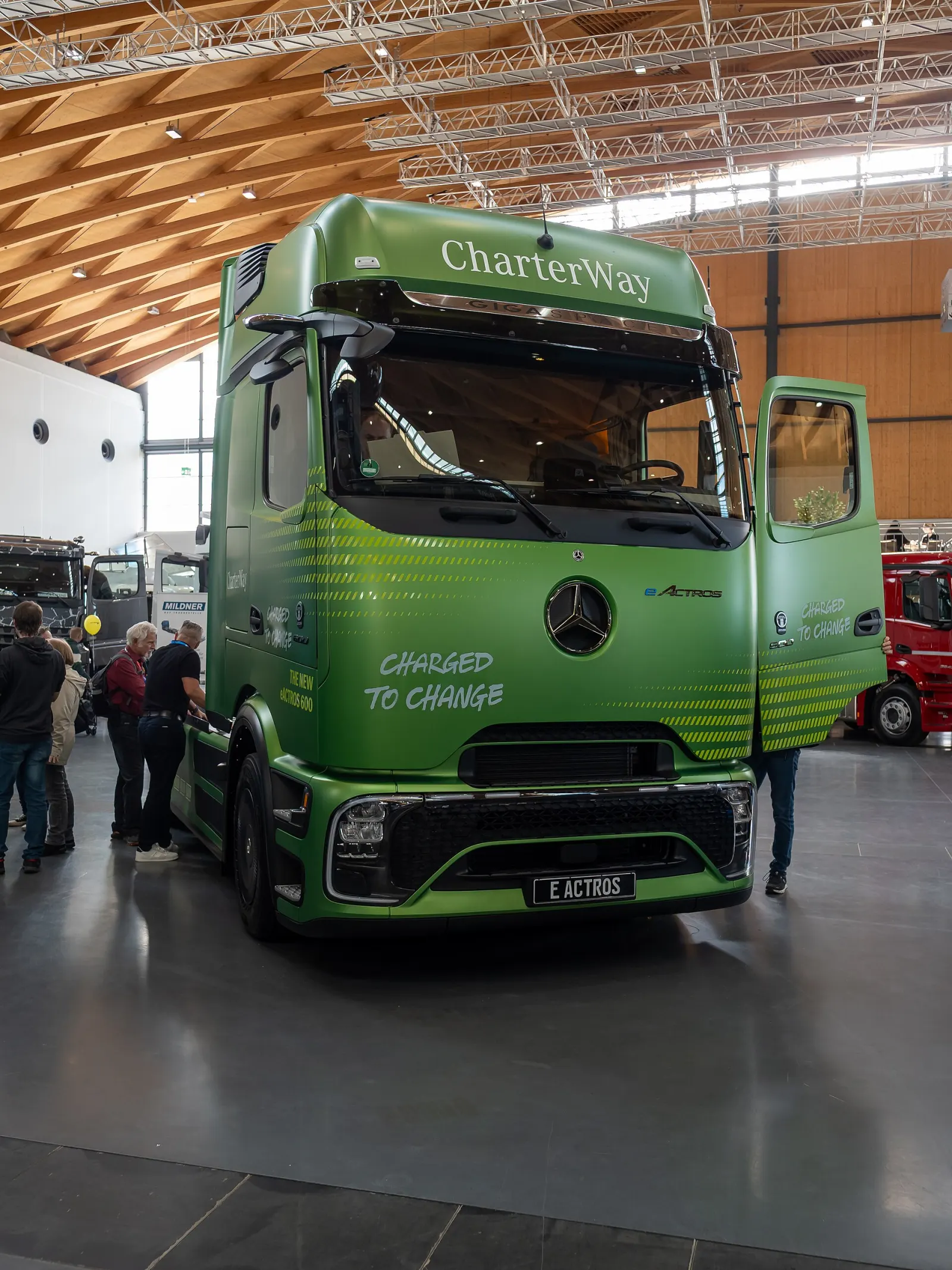
What shipped
The Mercedes-Benz eActros 600 — series production from late 2024 at Wörth, Germany — is the first battery-electric truck engineered specifically for linehaul rather than adapted from a diesel platform: 600 kWh of LFP batteries in the frame rails, a new electric rear axle, roughly 500 km real-world range at 40 tonnes gross, and a design life of 1.2 million kilometres. Volvo’s FH Electric and Scania’s battery-electric R-series compete in the same class; between them, electric trucks have moved from pilot fleets to published price lists.
The charging standard that decides it
Linehaul electrification lives or dies on charging during the driver’s mandated rest break. The Megawatt Charging System (MCS), standardised through CharIN, targets exactly that: charging at over a megawatt adds hundreds of kilometres in the 30–45 minutes a driver must rest anyway. The eActros 600 ships CCS-charging today and MCS-ready — the corridor charging networks now being built across Europe (and planned on Australia’s east-coast freight corridors) are the real infrastructure story.
The honest economics
An electric linehaul truck costs two to three times a diesel up front; the case is made on energy and maintenance per kilometre, and it only closes with high utilisation and depot or corridor charging at sensible tariffs. Daimler’s own framing is candid: total cost of ownership parity depends on energy prices and subsidies, not sticker price. For Australian operators, the double-shifted metro and regional shuttle duty cycles pencil first; road-train linehaul across the Nullarbor remains diesel or, eventually, hydrogen territory.
What it means for construction and haulage operators
Construction logistics — tipper work, agitator fleets, metro materials shuttles — sits squarely in the duty-cycle band where electric trucks already work. Contract tenders in Europe now score transport emissions; Australian infrastructure clients are following. Fleet operators who can produce per-vehicle energy, utilisation and emissions records from live telematics will be the ones who win that scoring.