 SITELIVE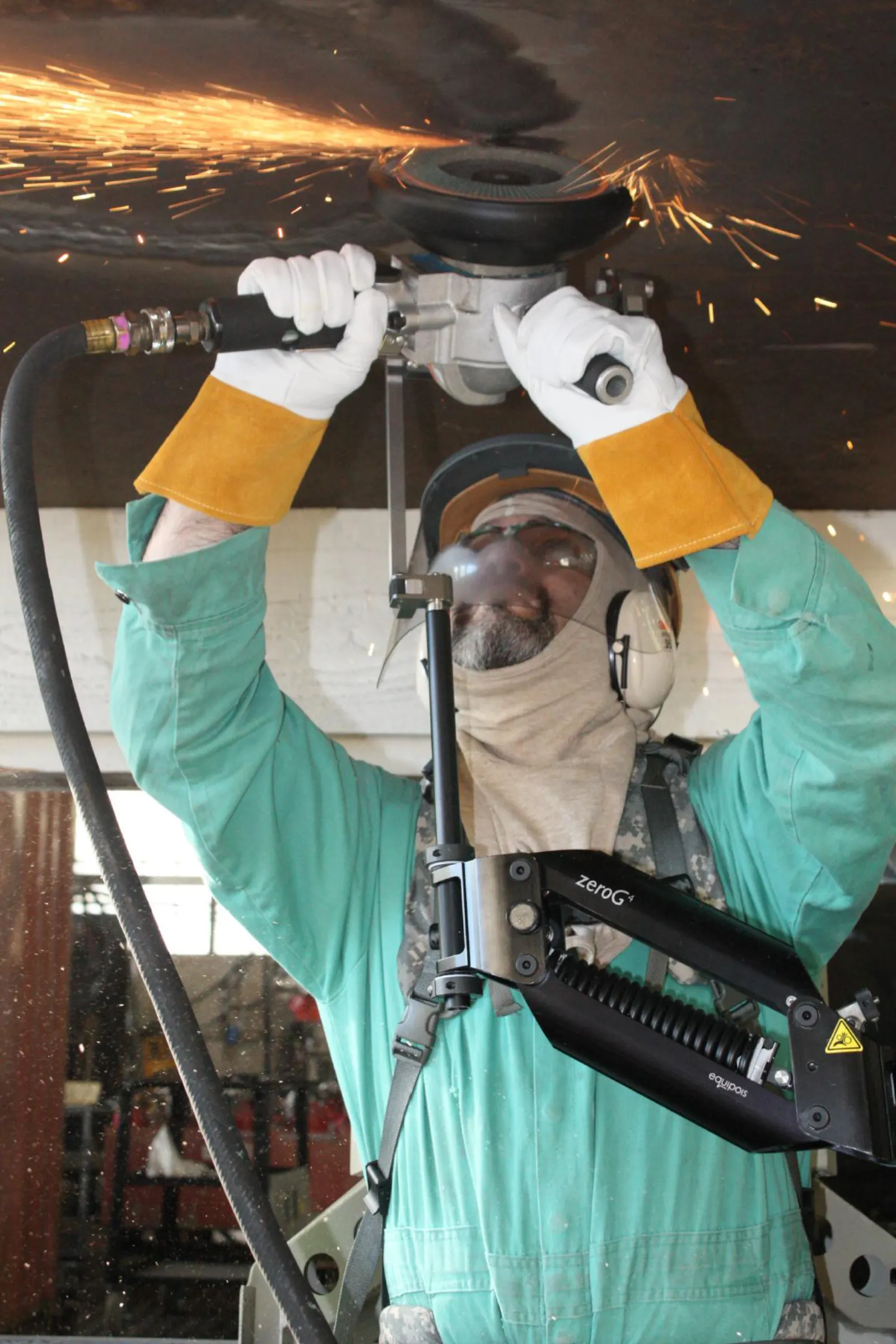
Why the sector keeps coming back to them
Body stressing is the most widespread injury mechanism in Australian workplaces. Safe Work Australia recorded 45,500 serious workers' compensation claims from body stressing in 2022–23p — 32.7% of a national total of 139,000 — and 50,326 in 2023–24p, more than a third of all serious claims and the most common mechanism across every major occupation group. In the trades where the load genuinely cannot be designed out — overhead fixing and drilling, rebar placing and tying, formwork stripping, blockwork — the hierarchy of control runs out of engineering options fast. That is the gap an exoskeleton is sold into, and it is a real gap, which is why the technology deserves a serious look rather than either enthusiasm or dismissal.
What the evidence supports
For back-support exoskeletons the controlled literature is consistent in direction. An updated systematic review in Ergonomics covering 13 studies of active and 20 of passive devices reported decreases in back-muscle activity, peak L5/S1 moments and spinal compression forces, with improved user endurance during lifting and static bending. Construction-relevant work shows the same shape at smaller magnitude: an evaluation of a passive device during simulated rebar work measured erector spinae activity reduced by 10–30% during the placing subtask, with reduced back range of motion consistent with the device's design intent.
Arm-support devices produce the cleaner result, which makes mechanical sense — they hold a static gravitational load the shoulder would otherwise hold. An experimental evaluation of a passive shoulder-support exoskeleton across sustained and repetitive overhead tasks found bilateral shoulder flexor muscle activity reduced by up to 81% as the device's peak torque amplitude increased, with lower perceived exertion, and every participant preferred wearing it to working unassisted. For overhead work at a fixed height and pace, that is about as favourable as ergonomics data gets.
What the evidence does not support
None of that is an injury outcome. NIOSH's position, argued in the American Journal of Industrial Medicine in 2020 and not overturned since, is that prospective intervention studies are needed before widespread implementation: most published work involves fewer than 15 participants, in laboratories, with healthy young men, which makes firm conclusions about musculoskeletal disorder incidence impossible. The measured side effects are not trivial either — reviews report increased abdominal and lower-limb muscle activity, altered joint angles, and degraded performance on tasks requiring agility. The device relocates load; it does not delete it. In the rebar study, muscle activity and back range of motion rose during the tying subtask even as they fell during placing, which is the decisive point for construction: the benefit is subtask-specific, and most trades alternate subtasks minute by minute. A 2023 Applied Ergonomics study of three passive arm-support devices across overhead nutrunning tasks found effects that were inconsistent between devices and between working heights — the category does not behave as a category. There is also no independent verification to lean on: ASTM Committee F48, formed in 2017, is building the consensus standards (F3474 on functional ergonomic parameters and test metrics, F3527 on assessing implementation risk in task-specific environments), but F3527 itself records that certification programmes for occupational exoskeletons do not currently exist. A vendor's percentage is a laboratory result for some task and some population, and the burden of testing whether it holds for your task sits with the buyer — alongside the practical failure modes field studies keep finding: strap discomfort and body pressure, restricted access to tools and belts, and thermal load, which in an Australian summer means trading one hazard against another.
How to run a trial that produces evidence
Pick one task with a documented injury or discomfort history rather than a showcase. Break it into subtasks and expect help in the sustained, flexed or elevated ones and hindrance in the agile ones — then measure both, because averaging them hides the trade. Take a baseline before any device arrives: task duration, discomfort by body region on a standard scale, and the near-miss and claim history for that crew. Run it for weeks rather than a demonstration afternoon; longitudinal field work shows an adaptation curve, with subjective ratings dipping mid-trial before recovering as muscle patterns adjust, so a single day measures novelty. Track abandonment as a primary endpoint, since a device left in the site container has an effect size of zero whatever its EMG data says. And keep it in its proper place in the hierarchy: an exoskeleton is an ergonomic intervention worn by the worker, not an engineering control that removes the hazard, and it is not a reason to stop mechanising a lift that should have been mechanised.